Tennis elbow Symptoms and causes
Overview
Tennis elbow, also known as lateral epicondylitis, is a condition that can result from overuse of the muscles and tendons in the elbow. Tennis elbow is often linked to repeated motions of the wrist and arm.
Despite its name, most people who get tennis elbow don't play tennis. Some people have jobs that involve repeated movements that can lead to tennis elbow. These include plumbers, painters, carpenters and butchers. However, often tennis elbow has no clear cause.
The pain of tennis elbow occurs mainly where the tough, cord-like tissues of the forearm muscles attach to a bony bump on the outside of the elbow. The tissues are known as tendons. Pain can spread into the forearm and wrist.
Rest, pain medicines and physical therapy often help relieve tennis elbow. People for whom these treatments don't help or who have symptoms that get in the way of daily living might have a procedure, such as a shot or surgery.
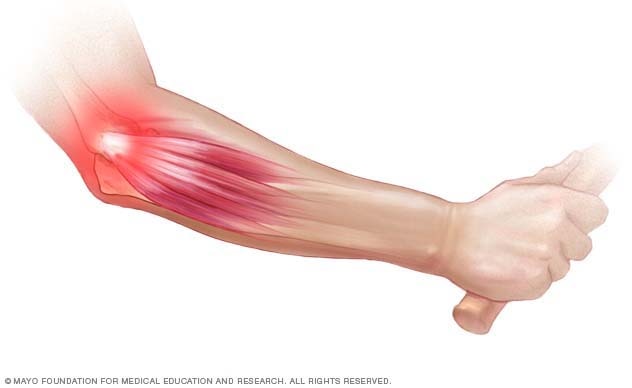
Tennis elbow
The pain of tennis elbow occurs mainly where the tough, cord-like tissues of forearm muscles, known as tendons, attach to a bony bump on the outside of the elbow. Tiny tears and longtime swelling, known as inflammation, can cause the tendon to break down. This causes the pain.
Symptoms
The pain of tennis elbow can travel from the outside of the elbow into the forearm and wrist. Pain and weakness can make it hard to:
- Shake hands or grip an object.
- Turn a doorknob.
- Hold a coffee cup.
When to see a doctor
Talk to a health care provider if self-care steps such as rest, ice and pain relievers don't ease your elbow pain and tenderness.
Causes
Tennis elbow is often linked to overuse and muscle strain. But the cause is not well understood. Sometimes, repeated tensing of the forearm muscles that are used to straighten and raise the hand and wrist triggers the symptoms. This can cause a breakdown of the fibers in the tendon that attaches the forearm muscles to the bony bump at the outside of the elbow.
Activities that can cause tennis elbow symptoms include:
- Playing racket sports, especially using backhand, with poor form.
- Using plumbing tools.
- Painting.
- Driving screws.
- Cutting up foods for cooking, particularly meat.
- Using a computer mouse a lot.
Less often, an injury or a condition that affects the body's connective tissues causes tennis elbow. Often, the cause isn't known.
Risk factors
Factors that can increase the risk of tennis elbow include:
- Age. Tennis elbow affects people of all ages. But it's most common in adults between the ages of 30 and 60.
- Work. People who have jobs that involve repeating motions of the wrist and arm are more likely to develop tennis elbow. These include plumbers, painters, carpenters, butchers and cooks.
- Certain sports. Playing racket sports increases the risk of tennis elbow. Not having good form or using poor equipment increases the risk even more. Playing more than two hours a day also increases the risk.
Other factors that can increase the risk include smoking, being obese and certain medicines.
From Mayo Clinic to your inbox
Sign up for free and stay up to date on research advancements, health tips, current health topics, and expertise on managing health. Click here for an email preview.
CON-20164402
Mayo Clinic does not endorse companies or products. Advertising revenue supports our not-for-profit mission.
Advertising & Sponsorship
Mayo Clinic Press
Check out these best-sellers and special offers on books and newsletters from Mayo Clinic Press.
