Overview
What a cataract looks like
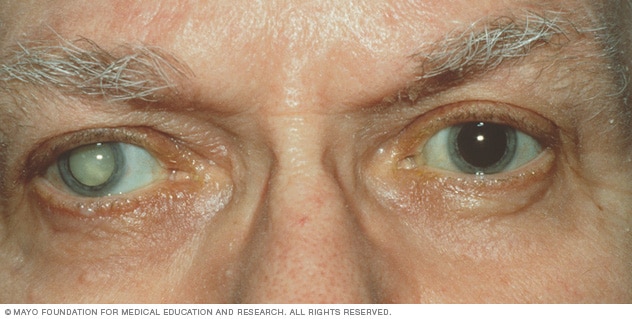
What a cataract looks like
A cataract occurs when the lens of your eye becomes cloudy. Eventually, a cataract can become like the one shown in this person's right eye.
How a cataract affects your vision

How a cataract affects your vision
Clear vision, like on the left, becomes blurred as a cataract forms, like on the right.
A cataract is a clouding of the lens of the eye, which is typically clear. For people who have cataracts, seeing through cloudy lenses is often like looking through a frosty or fogged-up window. Clouded vision caused by cataracts can make it hard to read, drive a car at night or see the expression on a friend's face.
Most cataracts develop slowly and don't disturb eyesight early on. But with time, cataracts will eventually affect vision.
At first, stronger lighting and eyeglasses can help deal with cataracts. But if impaired vision affects usual activities, cataract surgery might be needed. Cataract surgery is generally a safe, effective procedure.
Products & Services
Symptoms
Symptoms of cataracts include:
- Clouded, blurred or dim vision.
- Need for brighter light for reading and other activities.
- Trouble seeing in sunlight or bright lights.
- Trouble seeing at night.
- Halos or starbursts around lights at night.
- Frequent changes in eyeglass or contact lens prescription.
- Fading or yellowing of colors.
- Double vision in one eye.
At first, the cloudiness in vision caused by a cataract may affect only a small part of the eye's lens. Vision loss may be slight at first. As the cataract progresses, it clouds more of the lens. More clouding changes the light passing through the lens. This may lead to symptoms being more noticeable and symptoms that affect everyday activities.
When to see a doctor
Make an appointment for an eye exam if you notice any changes in your vision. If you develop sudden vision changes, such as double vision or flashes of light, sudden eye pain, or a sudden headache, see a member of your healthcare team right away.
Causes
Most cataracts develop when aging or injury changes the tissue that makes up the lens of the eye. Proteins and fibers in the lens begin to break down. This causes vision to become hazy or cloudy.
Some conditions passed down from parents or caused by gene variants can increase the risk of cataracts. Cataracts also can be caused by other eye conditions, past eye surgery or medical conditions such as diabetes. Long-term use of steroid medicines also may cause cataracts to develop.
How a cataract forms
The lens sits behind the colored part of your eye, called the iris. The lens focuses light that passes into your eye. This light is focused on the back part of the eye, called the retina.
As you age, the lenses in your eyes become less flexible, thicker and less clear. Aging and some medical conditions can cause proteins and fibers within a lens to break down and clump together. This is what causes the clouding in a lens.
As the cataract grows, the clouding becomes worse. A cataract scatters and blocks the light as it passes through the lens. This prevents a clearly defined image from reaching your retina. As a result, your vision becomes blurred.
Cataracts usually happen in both eyes, but not always at the same rate. The cataract in one eye may be worse than the other. This causes a difference in vision between eyes.
Types of cataracts
Cataracts can happen in different parts of the lens. The location of the cataract determines how vision is affected.
- Nuclear cataract. The nucleus is the center of the lens. A cataract usually causes far away objects to look blurry. Near vision generally stays the same at first and may improve for a while. The lens slowly turns more yellow or brown and makes your vision worse. This cataract can make it hard to see colors or tell some colors apart.
- Cortical cataract. The cortex is a layer of the lens that wraps all around the nucleus. A cortical cataract usually grows slowly. People with cortical cataracts often experience a glare that makes it hard to see in bright lighting. With an advanced cortical cataract, the lens appears completely white.
- Posterior subcapsular cataract. A posterior subcapsular cataract is in the back outer layer of the lens. This cataract usually affects near and distance vision and can make it hard to see in bright lights. This type of cataract tends to grow faster than others.
- Childhood cataracts. Some people are born with cataracts or develop them later in childhood. These cataracts may be caused by a genetic disorder, an infection during pregnancy, childhood disease or trauma.
Risk factors
Cataracts most often affects older adults. Other factors that increase your risk of cataracts include:
- Diabetes.
- Exposure to sunlight.
- Smoking and other tobacco use.
- Obesity.
- Family history of cataracts.
- Previous eye injury, disease or surgery.
- Prolonged use of corticosteroid medicines.
- Drinking excessive amounts of alcohol.
Prevention
No studies have proved how to prevent or slow the growth of cataracts. But healthcare professionals think several strategies may be helpful, including:
- Regular eye exams. Eye exams can help detect cataracts and other eye conditions at their earliest stages. Ask your healthcare team how often you should have an eye examination.
- Do not smoke. Ask a member of your healthcare team how to stop smoking. Medicines, counseling and other strategies are available to help you.
- Manage other health problems. Follow your treatment plan if you have diabetes or other medical conditions that can increase your risk of cataracts.
- Choose a healthy diet that includes plenty of fruits and vegetables. Adding fruits and vegetables to your diet ensures that you're getting vitamins, nutrients and antioxidants that can improve eye health and may reduce the risk of cataracts.
- Wear sunglasses. Ultraviolet light from the sun increases the risk of cataracts. When you're outdoors, wear sunglasses that block ultraviolet B rays.
- Reduce alcohol use. Drinking too much alcohol can increase the risk of cataracts.