Overview
Lymphedema is swelling that happens when fluid builds up in body tissue. This fluid is rich in protein and is usually drained through the body's lymphatic system. The lymphatic system is a network of vessels and lymph nodes that helps drain fluid and fight infection. When this system is damaged or blocked, the fluid cannot drain properly. This causes swelling.
However, not all swelling is caused by lymphedema. Swelling also can happen for other reasons, such as infection, injury, blood clots, heart failure, kidney disease or issues with veins.
Lymphedema most often affects the arms or legs, but it also can occur in the chest wall, belly, neck or genitals.
Cancer treatments that remove or damage lymph nodes are a common cause of lymphedema. Other blockages or injuries to the lymphatic system also can lead to the condition. Lymphedema can run in families or can happen without a known reason.
Severe lymphedema can make it hard to move the affected arm or leg. It also can increase the risk of skin changes, skin infections and skin breakdown. Rarely, it can cause other infections or sepsis. Treatment may include a special type of massage that helps push fluid out of the swollen area. Treatment also may include compression bandages, compression garments, pneumatic pumps and careful skin care. Rarely, you may need surgery to remove swollen tissue or create new drainage paths.
Products & Services
Symptoms
Parts of the immune system
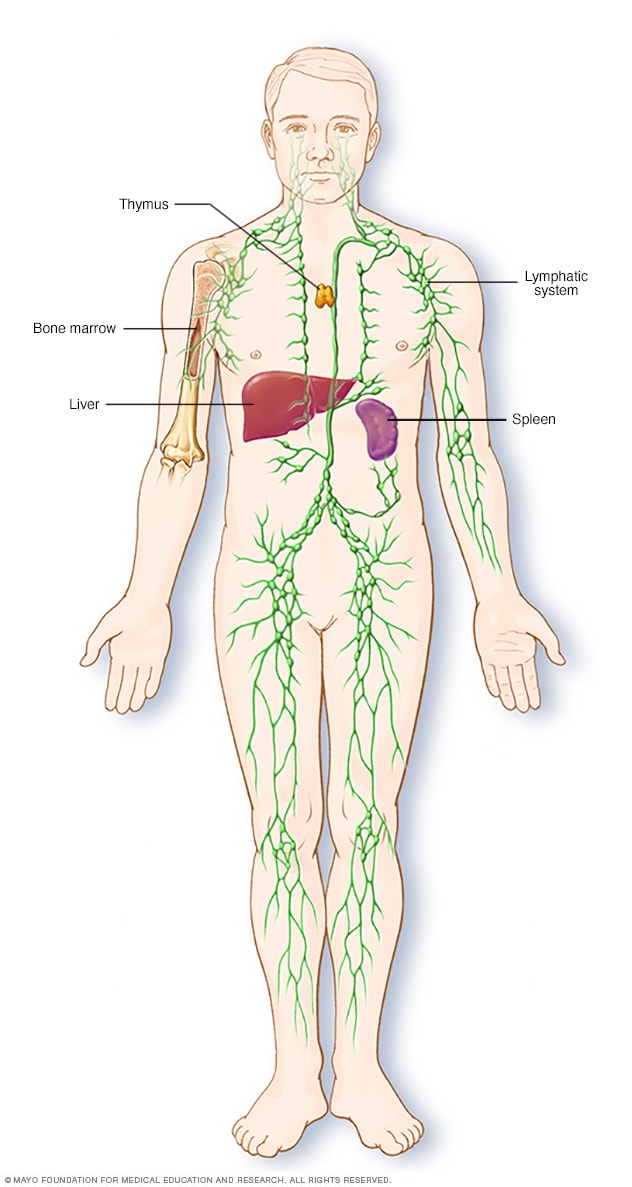
Parts of the immune system
The lymphatic system is part of the body's immune system, which protects against infection and disease. The lymphatic system includes the spleen, thymus, lymph nodes and lymph channels, as well as the tonsils and adenoids.
Leg lymphedema

Leg lymphedema
Lymphedema is swelling in an arm or a leg. In rare circumstances, it affects both arms or both legs. It also can affect the chest wall, belly, neck and genitals.
Common symptoms of lymphedema include:
- Swelling in part or all of an arm or a leg, including fingers or toes.
- A feeling of heaviness, tightness or fullness in the affected areas.
- Limited movement or stiffness.
- Repeated skin infections.
- Skin that becomes hard or thick. This condition is called fibrosis.
Symptoms can range from mild to serious. Lymphedema related to cancer treatment may not appear until months or even years after treatment.
When to see a doctor
Contact your healthcare professional if you have lasting swelling in your arm or leg or in another part of your body. If you already have lymphedema, see your healthcare professional right away if the swelling suddenly increases or worsens. See your healthcare professional right away if you have a fever and an area of redness or a change in skin color in the limb with lymphedema. Infections need to be treated quickly.
Causes
The lymphatic system is a network of vessels and lymph nodes that helps remove extra fluid and waste from tissue. It also plays an important role in the immune system by fighting infections and diseases. Lymph nodes act as filters that trap harmful substances. And they contain cells that fight infection and cancer.
Lymph fluid typically moves through the lymphatic system via thin tubes called lymph vessels. It moves as your muscles tighten and relax during everyday activities, such as walking or stretching. The walls of the lymph vessels also have tiny pumps that help keep the fluid moving.
Lymphedema happens when these vessels are damaged or blocked and can't drain the fluid properly. The fluid then builds up in the tissues, usually in an arm or a leg, causing swelling.
The most common causes of lymphedema include:
- Cancer. Tumors can block lymph vessels or nodes, preventing fluid from draining.
- Radiation treatment for cancer. Radiation can cause scarring and inflammation that damage lymph vessels or nodes.
- Surgery. Removing lymph nodes during cancer surgery can disrupt fluid flow. But this doesn't always lead to lymphedema.
- Parasites. In tropical regions, threadlike worms can block lymph nodes, causing swelling.
Sometimes, lymphedema is something a person is born with. This is rare. It happens when the lymphatic system doesn't develop or work as it should. Symptoms can happen at any age and may not be present at birth. Sometimes, lymphedema runs in families.
Risk factors
Certain factors can raise your chance of having lymphedema. You may be more likely to get it if you:
- Had surgery that removed or damaged lymph nodes.
- Received radiation therapy, especially near lymph nodes.
- Have or had cancer, particularly breast, pelvic or prostate cancer.
- Have or had a tumor that blocks lymph flow.
- Are older.
- Are overweight or have obesity.
- Have rheumatoid arthritis or psoriatic arthritis.
- Have a family history of lymphedema or an inherited lymphatic condition.
Complications
Possible complications of lymphedema include:
- Skin infections, called cellulitis. Excess fluid allows germs to grow. Even a small cut can lead to infection, causing redness or a change in skin color, warmth, pain, and swelling. Fungal infections between your toes can cause skin cracks that can lead to infection. Your healthcare professional may give you antibiotics to start quickly if symptoms appear.
- Sepsis. If cellulitis isn't treated right away, the infection can spread to the bloodstream, leading to sepsis — a life-threatening condition that needs emergency care.
- Fluid leakage. Severe swelling can cause lymph fluid to leak or form blisters on the skin.
- Skin changes. In some people with severe lymphedema, the skin may become very thick and hard.
- Cancer. A rare form of soft tissue cancer can result from severe lymphedema that isn't treated. This is uncommon.
Aug. 07, 2026