
Overview
Meningitis is an infection and swelling, called inflammation, of the fluid and membranes around the brain and spinal cord. These membranes are called meninges.
The inflammation from meningitis most often triggers symptoms such as headache, fever and a stiff neck.
Viral infections are the most common cause of meningitis in the United States. Bacteria, parasites and fungi also can cause it. Sometimes meningitis improves in a few weeks without treatment. But meningitis also can cause death. It often needs quick treatment with antibiotics.
Seek medical care right away if you think that you or someone in your family has meningitis. For meningitis caused by bacteria, early treatment can prevent serious complications.
Symptoms
Early meningitis symptoms may be like those of the flu. Symptoms may come on over several hours or over a few days.
Symptoms in people older than 2 years
The following may be symptoms of meningitis in people older than 2 years:
- Sudden high fever.
- Stiff neck.
- Bad headache.
- Nausea or vomiting.
- Confusion or trouble concentrating.
- Seizures.
- Sleepiness or trouble waking.
- Sensitivity to light.
- No desire to eat or drink.
- Skin rash sometimes, such as in meningococcal meningitis.
Symptoms in newborns and infants
The following may be symptoms of meningitis in newborns and infants:
- High fever.
- Constant crying.
- Being very sleepy or irritable.
- Trouble waking from sleep.
- Being not active or sluggish.
- Not waking to eat.
- Poor feeding.
- Vomiting.
- A bulge in the soft spot on top of the baby's head.
- Stiffness in the body and neck.
When to see a doctor
Seek medical care right away if you or someone in your family has meningitis symptoms such as:
- Fever.
- Bad headache that doesn't go away.
- Confusion.
- Vomiting.
- Stiff neck.
Bacterial meningitis can cause death within days without fast antibiotic treatment. Delayed treatment also increases the risk of long-term brain damage.
Talk with your healthcare professional if you've been near someone with meningitis. That may be a family member or someone you live or work with. You may need to take medicines to prevent getting an infection.
Causes
Viral infections are the most common cause of meningitis in the United States, followed by bacterial infections and, rarely, fungal and parasitic infections. Because bacterial infections can lead to death, finding the cause is vital.
Bacterial meningitis
Germs that enter the bloodstream and travel to the brain and spinal cord cause bacterial meningitis. But bacterial meningitis also can happen when bacteria directly enter the meninges. This may be caused by an ear or sinus infection or a skull fracture. Rarely, some surgeries can cause it.
Several strains of bacteria can cause bacterial meningitis. The most common are:
- Streptococcus pneumoniae. This germ is the most common cause of bacterial meningitis in infants, young children and adults in the United States. It more often causes pneumonia or ear or sinus infections. A vaccine can help prevent this infection.
-
Neisseria meningitidis. This germ causes a bacterial meningitis called meningococcal meningitis. These germs most often cause an upper respiratory infection. But they can cause meningococcal meningitis when they enter the bloodstream.
This is an easy-to-catch infection that affects mainly teenagers and young adults. It may cause local outbreaks in college dorms, boarding schools and military bases.
A vaccine can help prevent infection. Even if vaccinated, anybody who has been in close contact with a person with meningococcal meningitis should get an oral antibiotic. This can help prevent the disease.
- Haemophilus influenzae. Haemophilus influenzae type b bacteria, also called Hib bacteria, was once the leading cause of bacterial meningitis in children. But new Hib vaccines have greatly cut this type of meningitis.
- Listeria monocytogenes. These bacteria can be found in cheeses that aren't pasteurized, hot dogs and lunch meats. People who are pregnant, newborns, older adults and people with weakened immune systems are most likely to be affected. During pregnancy, listeria can cross the placenta. Infections in late pregnancy may be fatal to the baby.
Viral meningitis
Viral meningitis is most often mild and clears on its own. A group of viruses known as enteroviruses is most often the cause in the United States. Enteroviruses are most common in late summer and early fall. Viruses such as herpes simplex virus, HIV, mumps virus, West Nile virus and others also can cause viral meningitis.
Chronic meningitis
Chronic meningitis is meningitis whose symptoms last at least four weeks without letup. There are many causes of chronic meningitis. Symptoms can be like those of new-onset meningitis. But they come on slower and last longer. Symptoms may include headache, fever, vomiting and brain fog.
Fungal meningitis
Fungal meningitis isn't common in the United States. It may act like bacterial meningitis. But symptoms may start slower and build over time. Breathing in fungal spores found in soil, decaying wood and bird droppings can be the cause.
Fungal meningitis doesn't spread from person to person. Cryptococcal meningitis is a common fungal form of the disease. It affects people with weakened immune systems, such as from AIDS. It can cause death if not treated with an antifungal medicine. Even with treatment, fungal meningitis may come back.
Tuberculous meningitis
This type of meningitis is a rare complication of tuberculosis, also called TB. But it can be serious. Like fungal meningitis, its symptoms can start slowly and build up over days to weeks. Tuberculosis passes easily from person to person. Tuberculous meningitis needs treatment with TB medicines.
Parasitic meningitis
Parasites can cause a rare type of meningitis called eosinophilic meningitis. A tapeworm infection in the brain or cerebral malaria also can cause parasitic meningitis. Amoebic meningitis is a rare type that sometimes comes from swimming in fresh water. It can quickly become life-threatening.
The main parasites that cause meningitis most often infect animals. People can get infected by eating foods that have these parasites. Parasitic meningitis isn't spread from person to person.
Other meningitis causes
Causes of meningitis that aren't infections include chemical reactions, medicines, allergies, some types of cancer and diseases such as sarcoidosis.
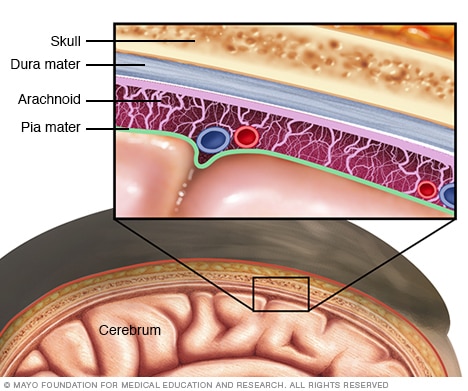
Meningitis
Meningitis is an infection and swelling and irritation, called inflammation, of the fluid and three membranes that protect the brain and spinal cord. The three membranes are called meninges. The tough outer membrane is called the dura mater, and the delicate inner layer is the pia mater.
Risk factors
Risk factors for meningitis include:
- Not getting vaccinations. Risk rises for anyone who hasn't gotten all the childhood or adult vaccinations.
- Age. Viral meningitis most often happens in children younger than age 5 years. Bacterial meningitis is common in those younger than age 20 years.
- Living in groups. College students living in dorms, people on military bases, and children in boarding schools and child care facilities are at greater risk of meningococcal meningitis. This is probably because the germ quickly spreads through large groups.
- Pregnancy. Pregnancy increases the risk of an infection caused by listeria bacteria, which also may cause meningitis. The infection raises the risk of miscarriage, stillbirth and premature delivery.
- Weakened immune system. AIDS, alcohol use disorder, diabetes, medicines that lower the immune system and other factors that affect the immune system raise the risk of meningitis. Having a spleen removed also raises risk. For people without a spleen, a vaccine can lower the risk.
Complications
Meningitis complications can be serious. The longer someone has the disease without treatment, the greater the risk of seizures and long-term nervous system damage. Damage can include:
- Hearing loss.
- Trouble with vision.
- Memory issues.
- Learning disabilities.
- Brain damage.
- Trouble walking.
- Seizures.
- Kidney failure.
- Shock.
- Death.
Prevention
Common germs that can cause meningitis can spread through coughing, sneezing or kissing. Germs also can spread by shared eating utensils, toothbrushes or cigarettes.
These steps can help prevent meningitis:
- Wash your hands. Careful hand-washing helps prevent the spread of germs. Teach children to wash their hands often. Teach them to wash hands before eating and after using the toilet, spending time in a crowded public place, or petting animals. Show them how to wash and rinse their hands well.
- Practice good hygiene. Don't share drinks, foods, straws, eating utensils, lip balms or toothbrushes with anyone. Teach children and teens to avoid sharing these items too.
- Stay healthy. Keep your immune system strong by getting enough rest, exercising regularly, and eating a good diet with fresh fruits, vegetables and whole grains.
- Cover your mouth. When you need to cough or sneeze, be sure to cover your mouth and nose. Even better, cough or sneeze into your shoulder.
- If you're pregnant, watch what you eat. Reduce your risk of a listeria infection by cooking meat, including hot dogs and lunch meats, to 165 degrees Fahrenheit (74 degrees Celsius). Eat only cheeses made from milk that has been pasteurized to kill germs. Check labels to be sure cheeses are made with pasteurized milk.
Vaccinations
Vaccinations can help prevent some forms of bacterial meningitis. Vaccinations include:
- Haemophilus influenzae type b vaccine. This vaccine is called Hib for short. The U.S. Centers for Disease Control and Prevention, also called the CDC, suggest this vaccine for children starting at about 2 months of age. The vaccine also is for some adults. This includes adults who have sickle cell disease or AIDS and those who don't have a spleen.
- Pneumococcal conjugate vaccine. This vaccine also is called PCV15 or PCV20. The CDC suggests this vaccination for children younger than 2 years. The vaccine is also for children ages 2 through 18 who are at high risk of pneumococcal disease.
-
Pneumococcal polysaccharide vaccine. This vaccine also is called PPSV23. Older children and adults who need protection from pneumococcal germs might get this vaccine. The CDC suggests the PPSV23 vaccine for all adults older than 65.
It's also for younger adults and children ages 2 and older who have weak immune systems or ongoing illnesses such as heart disease, diabetes or sickle cell anemia. And it's for anyone who doesn't have a spleen.
-
Meningococcal conjugate vaccine. This vaccine also is called MenACWY. The CDC suggests giving a single dose of MenACWY to children ages 11 to 12, with a booster shot given at age 16. Children who get the first vaccine between ages 13 and 15 can have the booster between ages 16 and 18. Those who get the first shot at age 16 or older don't need a booster.
Children between the ages of 2 months and 10 years who are at high risk of bacterial meningitis can get this vaccine. So can children in this age range who have been around someone with the disease. It's also a vaccine for people who haven't been vaccinated who have been exposed to meningitis but aren't sick.
-
Serogroup B meningococcal vaccine (MenB). The CDC suggests this vaccine for adults and children 10 years and older who are at increased risk of meningococcal disease. They include adults and children with sickle cell disease, those who have a damaged spleen or those who have had their spleen removed.
This vaccine also is for people with the rare immune disorder called complement component deficiency or who take certain medicines. People who are exposed to an outbreak of serogroup B meningococcal disease also might get this vaccine.