People with hand arthritis can take steps to make everyday tasks a little easier. Pinching items between the thumb and forefinger puts extra stress on already painful joints.
If you have arthritis, making adjustments and using self-help or assistive devices at home can help protect your joints.
Toothbrushes and small utensils
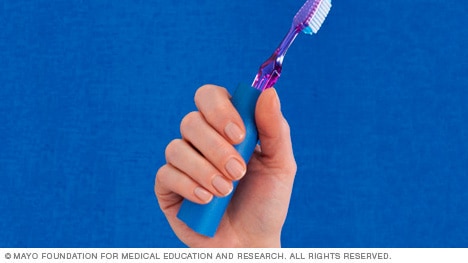
Try adding a short length of foam tubing over the handles of your toothbrush. Building up the handle eases the pressure on the hand joints. Another option is to use an electric toothbrush instead.
Foam tubing also can be used for small utensils like spoons, forks and knives.
Getting dressed
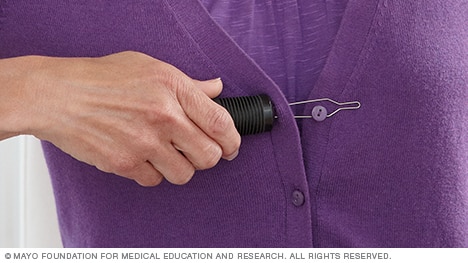
To protect your finger joints, avoid tightly pinching with your fingers. For example, use a buttonhook to help you grasp and fasten buttons on your clothes.
Make getting dressed easier by choosing loose-fitting clothes with easy-to-close fasteners, such as zippers or large buttons. Select pants or skirts with a stretch waist. Slip-on shoes and a long-handled shoehorn also can protect your hand joints.
Doorknob levers and turning tools
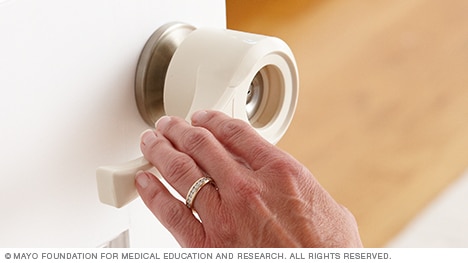
Squeezing a doorknob can be hard on your finger joints. A lever attachment makes it easier to open the door.
A turning tool features a group of collapsible metal pins. These pins mold around objects such as oven knobs and the ends of car or house keys. Using the large handle on the tool helps you avoid the pinching motion required to turn knobs and keys.

Large-handled tools
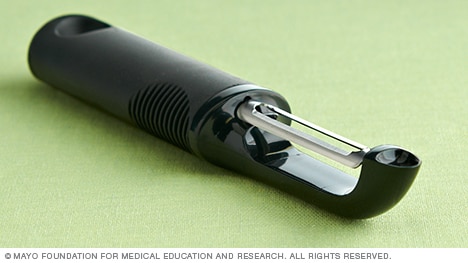
Many kitchen tools can now be purchased with larger handles. Texture and cushioning on the handles also can make the utensil easier to hold with less grip strength.
Vegetable peelers, spatulas and serving spoons with bigger handles can ease the pressure on your joints.
Jar and can openers
Trying to open a jar lid or bottle cap can place stress on your hand joints. There are many different types of opening devices that can help.
Jar openers with larger, cushioned grips ease the stress on your hand joints. Installing a mounted jar opener is another option. For cans, use an electric can opener to avoid the finger strain of turning a hand-held model.
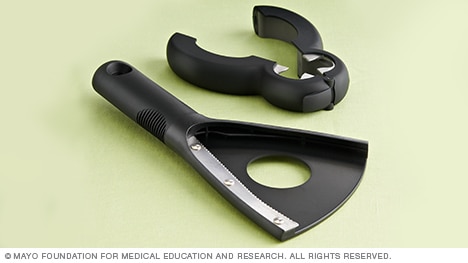
Kitchen knives and cutting boards
Choose a kitchen knife that allows your hand and wrist to stay in a more neutral position. Knives with offset handles and serrated blades take stress off your joints. Using an electric knife can make cutting large items easier.
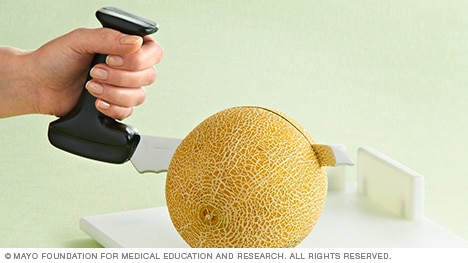
An adaptive cutting board has nail pegs and a raised ledge to help secure food during meal prep. This can help protect hand joints by lessening the amount of force needed to hold on to food while chopping.

Automatic scissors
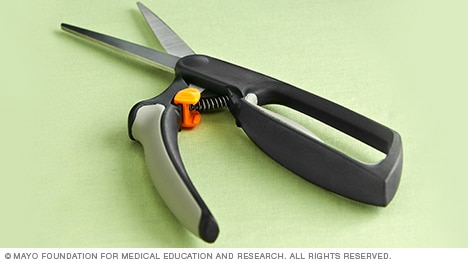
With normal scissors, your hand must work to open the scissors as well as close them. If you sew or do other crafts where you often need to cut, buy a spring-loaded pair of scissors.
Spring-loaded scissors open automatically, which lessens joint strain in your fingers and thumb.
Pens and pencils
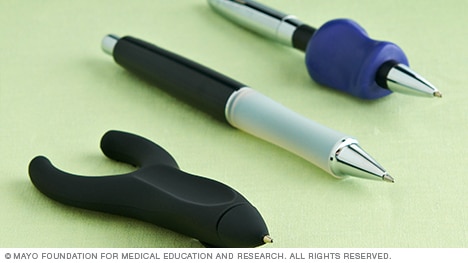
Use a large-barrel pen or pencil to make writing more comfortable. Install rubber grips over narrow pens and pencils to reduce stress on finger and thumb joints.
Some pens are designed to be worn on a finger. Others are shaped like a Y so your forefinger can rest on top of the pen.
Holding a book
Use your palms to hold an object when you can, such as when reading a book or magazine. This helps you avoid bending the large knuckles of your hand while keeping your finger joints straight.
You also may try placing reading materials flat on a table, or on a book holder or pillow. This helps you stay away from grasping the items with your hands. Another option is using an electronic tablet or mobile device for reading when you have arthritis.

Shoulder straps
Large joints are stronger than small ones. Use your large joints as much as possible when carrying items.
When carrying a bag, use a shoulder strap that crosses your body. This is better for your joints than carrying the entire weight of a heavy briefcase or purse in your fingers.