Diagnosis
Tricuspid valve regurgitation may cause no symptoms. Healthcare professionals may find it when doing imaging tests of the heart for other reasons.
To diagnose tricuspid valve regurgitation, a healthcare professional asks questions about your symptoms and medical history. The health professional does a physical exam and may check if you have bulging or strongly pulsing neck veins, swollen legs or belly, or an enlarged or tender liver. These findings can mean there is right-sided heart failure.
The healthcare professional listens to your heart using a device called a stethoscope. A whooshing sound called a heart murmur may be heard near the lower left or right edge of the breastbone or just below it. The murmur may become louder as you breathe in, but it can be faint or absent.
Tests
To learn if you have tricuspid valve regurgitation, your healthcare team does tests to check your heart and heart valves. The tests can show how severe any valve disease is and help your care team learn the cause. They also can show the size and pumping function of the right side of the heart, estimate pressure in the lung arteries and find other heart conditions.
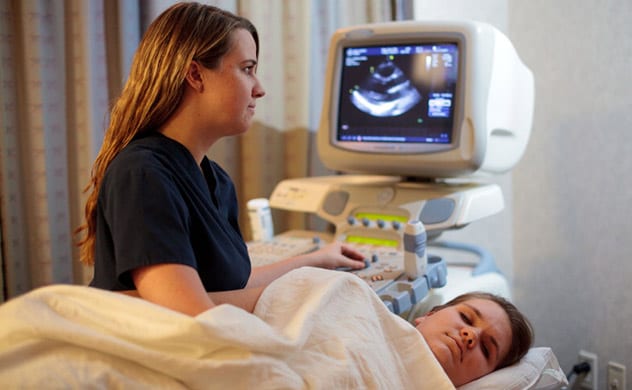 Echocardiogram
An echocardiogram uses sound waves to create pictures of the heart in motion. The test can show the structure of the heart and heart valves and how blood flows through the heart.
Tests to diagnose tricuspid valve regurgitation may include:
- Echocardiogram. An echocardiogram is the main test for diagnosing tricuspid valve regurgitation. Sound waves make pictures of the beating heart. The test shows how blood flows through the heart and the heart valves, including the tricuspid valve.
The test also helps the care team find out the cause and how severe your condition is. It also shows whether the right side of the heart is enlarged, how well the right ventricle pumps and whether pressure in the lungs may be high. The care team may look for other heart disease too.
There are different types of echocardiograms. A standard echocardiogram is called a transthoracic echocardiogram (TTE). It makes pictures of the heart from outside the body. A TTE is often the first test used to diagnose tricuspid valve regurgitation.
Sometimes, a healthcare professional may need a more detailed echocardiogram to better see the tricuspid valve when the cause of the leak isn't clear, or to help plan treatment. This test is called a transesophageal echocardiogram (TEE). It uses a probe that goes mouth into the esophagus. That's the tube that connects the throat to the stomach, called the esophagus. From the esophagus the probe takes detailed pictures of the heart. The test may make 3D pictures of the heart. It also may show how a pacemaker or defibrillator wire affects the valve. The type of echocardiogram you have depends on the reason for the test and your overall health.
An echocardiogram report may describe the leak as trace, mild, moderate or severe. These are grades. Trace tricuspid regurgitation means that the test detected a very small amount of backward blood flow. Trace or mild leakage with little effect on circulation is commonly seen when the valve structure is typical. The care team considers the rest of the echocardiogram when deciding what the finding means.
- Electrocardiogram (ECG or EKG). This quick test records the electrical signals in the heart. It shows how the heart is beating. It may show atrial fibrillation or another rhythm condition. It also may show signs of enlargement of the right side of the heart. Sticky patches with sensors on them, called electrodes, go on the chest and sometimes the legs. Wires connect the sensors to a computer, which shows or prints results.
- Chest X-ray. A chest X-ray shows the condition of the heart and lungs. It can show whether the right side of the heart looks enlarged. It also can show the lung arteries and whether there is fluid around the lungs.
- Cardiac MRI. This test uses magnetic fields and radio waves to make detailed pictures of the heart. Cardiac MRI may help show the severity of tricuspid valve regurgitation. The test also gives details about the lower right heart chamber and measures the amount of blood leaking backward. It also may show if there is left-sided heart disease or mitral valve disease.
- Right-heart catheterization. This test isn't often used to diagnose tricuspid valve regurgitation. But it can be helpful when other tests do not diagnose the cause of the condition, provide enough information or do not agree. A doctor guides a thin, flexible tube called a catheter through a vein in the arm or groin and moves it to the right side of the heart and lung arteries. The doctor may use this test to measure pressures in these areas, as well as resistance in the lung blood vessels.
Grades
The severity grade of tricuspid valve regurgitation describes how much blood leaks backward through the tricuspid valve. This grade is measured mainly with an echocardiogram. The echocardiogram uses several measurements and not only one finding.
- Trace. Trace or trivial tricuspid regurgitation means that only a very small amount of blood is leaking backward into the upper right heart chamber, called the right atrium. The leakage can be seen during an imaging test. This tiny leak with little effect on blood flow is sometimes called physiological tricuspid valve regurgitation. It occurs in most people, so it is typical to see this. The care team considers the valve structure and the rest of the echocardiogram when deciding what the finding means.
- Mild. Mild tricuspid valve regurgitation often causes no symptoms and usually does not need treatment. Whether follow-up is needed depends on the cause and whether the right side of the heart changes. Your care team decides whether you need follow-up based on the cause and whether the size or pumping function of the right side of the heart changes.
- Moderate. Moderate tricuspid regurgitation may cause few or no symptoms. It isn't the same as severe disease. On an echocardiogram, the care team checks the size of the right atrium and right ventricle, how well the right ventricle pumps and pressure in the lung arteries. It also looks at the heart and valves for signs of other diseases.
- Severe. Severe tricuspid valve regurgitation is more likely to enlarge the right atrium and the right ventricle and raise pressure in the veins. It may cause symptoms such as tiredness, shortness of breath, and swelling in the legs or belly. Ongoing congestion can affect the liver or kidneys.
To decide if tricuspid valve regurgitation is mild, moderate or severe, your care team uses several echocardiogram measurements. To plan your treatment and follow-up care, the team considers the grade, your symptoms and the cause of the leak. The team also considers the size of the right heart chambers, the pumping function, pressure in the lung arteries and whether you have other heart conditions.
Tricuspid valve regurgitation does not get worse for everyone who has it. Moderate or severe tricuspid valve regurgitation can progress over time, but progression varies. Follow-up depends on the starting grade, cause, symptoms and effects on the right side of the heart.
More Information
Treatment
Treatment for tricuspid valve regurgitation depends on its cause, severity, symptoms, how the right side of the heart is responding and related heart or lung conditions. The goals are to:
- Help the heart work better.
- Relieve symptoms and fluid buildup.
- Improve quality of life.
- Treat conditions affecting the leak.
- Prevent or limit complications or damage to the right side of the heart and other organs.
Tricuspid valve regurgitation treatment may include:
- Monitoring.
- Treatment of other conditions.
- Medicines.
- A heart procedure.
- Surgery to repair or replace the heart valve.
The exact treatment depends on your symptoms and how severe the valve disease is. Some people with mild tricuspid valve regurgitation only need regular health checkups and never need surgery. Your healthcare team tells you how often you need appointments.
Monitoring
A trace leak with no symptoms or heart changes may not need follow-up. Mild or moderate tricuspid valve regurgitation may be checked over time based on its cause, symptoms, severity and effects on the right side of the heart. Your care team decides how often you need follow-up appointments or echocardiograms.
Treatment of related conditions
Treatment for secondary tricuspid valve regurgitation focuses partly on the condition causing the leak. This may include treating heart failure, lowering pressure in the lung arteries when needed, treating left-sided heart disease and managing atrial fibrillation.
You may need supplemental oxygen if low blood oxygen contributes to pulmonary hypertension and secondary tricuspid valve regurgitation.
Medicines
Your healthcare professional may suggest medicines to control symptoms of tricuspid valve regurgitation. Medicines also may be used to treat the cause of the condition.
Some medicines used for tricuspid valve regurgitation include:
- Diuretics. Often called water pills, these medicines make you urinate more often. This helps remove extra fluid from the body. Diuretics can reduce swelling in the legs, fluid in the belly, and other signs of heart failure and congestion. They do not repair the valve or stop the tricuspid valve from leaking backward.
- Potassium-sparing diuretics. Also called aldosterone antagonists, these medicines may help some people with heart failure manage fluid buildup.
- Other medicines to treat or control heart failure.
- Medicines to control irregular heartbeats. Some people with tricuspid valve regurgitation have a type of irregular heartbeat called atrial fibrillation (AFib).
Surgery or other procedures
You may need surgery to repair or replace a diseased or damaged tricuspid valve.
Doctors may do tricuspid valve repair or replacement as open-heart surgery or a surgery with smaller cuts, called minimally invasive heart surgery. Sometimes, doctors may treat tricuspid valve regurgitation using thin, flexible tubes called catheters.
You may need tricuspid valve repair or tricuspid valve replacement surgery if:
- The valve disease is severe and causes symptoms, such as shortness of breath or right-sided heart failure, even after medical treatment.
- The severe leak is causing the right ventricle to become enlarged or weaker, even if you have few or no symptoms of tricuspid valve regurgitation.
- You have severe tricuspid valve regurgitation and need heart surgery for another condition, such as mitral valve disease.
When possible, your care team may recommend surgery or other procedures before severe weakness in the right ventricle or lasting liver or kidney damage develops.
Types of transcatheter procedures to treat tricuspid valve regurgitation include:
-
Tricuspid transcatheter edge-to-edge repair (T-TEER). Your healthcare professional may suggest T-TEER if you have severe symptoms despite medical treatment and face a high risk of complications from surgery. Your care team also considers your valve's structure and whether a clip can be placed safely. This treatment uses tubes called catheters and a clip to fix a leaky tricuspid valve. The clip brings the valve flaps closer together so less blood goes backward. Open-heart surgery is not needed for T-TEER.
Research found that T-TEER reduced leakage and improved health status and quality of life. At two years, it also reduced repeated heart failure hospitalizations compared with medical therapy alone. Death rates were similar between the groups.
- Transcatheter tricuspid valve implantation. A catheter-delivered replacement valve may be an option for some people with severe tricuspid valve regurgitation that causes symptoms. The replacement tissue valve is attached to a metal frame and delivered to the tricuspid valve through a catheter. The valve is implanted into the existing biological valve. This is done without open-heart surgery.
Types of heart valve surgeries to treat tricuspid valve regurgitation include:
-
Tricuspid valve repair. Surgeons recommend valve repair when possible. It preserves the existing heart valve. It also might reduce the need for long-term use of blood thinners.
Tricuspid valve repair usually is done during open-heart surgery. A long cut is made in the center of the chest. A surgeon may tighten or reshape the ring around the valve and repair the leaflets or supporting tissues.
If Ebstein anomaly is the cause of tricuspid regurgitation, heart surgeons may do a type of valve repair called the cone procedure. During this treatment, the surgeon separates the tricuspid valve flaps from the heart muscle. Then the surgeon rotates the flaps and attaches them again.
-
Tricuspid valve replacement. If the tricuspid valve can't be repaired, surgery may be needed to replace the valve. Surgeons may do tricuspid valve replacement surgery as open-heart surgery or minimally invasive surgery.
During tricuspid valve replacement, a surgeon removes the damaged or diseased valve. The surgeon replaces the valve with a mechanical valve or a valve made from biological tissue. A tissue valve is called a biological valve.
If you have a mechanical valve, you need to take blood thinners for the rest of your life to prevent blood clots. Biological tissue valves generally don't need lifelong blood thinners only because of the valve. But another condition, such as atrial fibrillation, may make this medicine necessary. Biological tissue valves can wear down over time and may need to be replaced. Together, you and your care team discuss the risks and benefits of each type of valve to decide which option fits your health needs and preferences.
Follow-up after a valve procedure
After tricuspid valve repair or replacement, you need regular health checkups to make sure your heart and valve are working as they should. Your care team may recommend a baseline echocardiogram after your valve procedure. They might suggest you have regular follow-up echocardiograms depending on the type of procedure you had, your heart function, your symptoms and other heart conditions.
Pregnancy considerations
People who have tricuspid valve disease that's more than minor may need careful and regular checkups during pregnancy. Your care team also may suggest an evaluation before you become pregnant. This can help the care team explain any possible risks and plan coordinated care during pregnancy.
Mild or moderate tricuspid regurgitation is generally managed well during pregnancy. If you have severe tricuspid valve regurgitation, pulmonary hypertension or reduced function of your right ventricle, you may have a higher risk of right-sided heart failure or heart rhythm problems. You and your care team can work together to individualize your decisions about pregnancy based on the severity of the leak and related heart conditions.
Cone procedure for tricuspid valve repair
In the cone procedure, a surgeon separates the tricuspid valve flaps, called leaflets, and reshapes them so that they work properly.
During the cone procedure, the surgeon isolates the deformed leaflets of the tricuspid valve. The surgeon then reshapes them so they function properly.
More Information
Prognosis
A small tricuspid valve leak may have little or no effect on daily life in many people. Outlook varies based on whether you have symptoms, how severe the leak is, how well the right ventricle works and whether you have other heart, kidney or liver problems. No single estimate of life expectancy applies to everyone.
Self-care
If you have tricuspid valve regurgitation or any type of heart disease, your healthcare team may suggest making lifestyle changes. Healthy habits don't repair the leak but can support your heart health and help manage related conditions. Your care team may suggest that you:
- Eat healthy foods. Eat plenty of whole foods, fruits, vegetables, whole grains and lean proteins. Also include some nuts, seeds, and olive or canola oil in your eating pattern. If you have severe tricuspid valve regurgitation causing swelling or right-sided heart failure, your care team may suggest limiting salt.
- Don't smoke, vape, or use tobacco or nicotine products. Smoking is a major risk factor for coronary artery disease. Nicotine tightens blood vessels and forces the heart to work harder. Not smoking is one of the best ways to lower the risk of a heart attack. Also, people who smoke may have more complications in heart valve surgery. If you need help quitting, talk with your healthcare team.
- Get regular exercise and stay active. Exercise can help improve heart health. Adults should aim for at least 150 minutes of moderate activity or 75 minutes of vigorous activity each week. Ask your healthcare team what amount and type of exercise is right for you.
- Keep a healthy weight. Ask your healthcare team what a healthy weight is for you.
- Manage blood pressure, cholesterol and blood sugar. High blood pressure and high cholesterol raise the risk of heart disease. Make lifestyle changes and take medicines as directed to manage high blood pressure, high blood sugar and high cholesterol. If you have diabetes, managing your blood sugar can help lower your risk of heart disease.
- Manage stress. Find ways to help lower any emotional stress. Some tips are to get more exercise, practice mindfulness and connect with others in support groups.
If you have a replacement heart valve or artificial material used in a valve repair, ask your care team if you need to take antibiotics before certain dental procedures. Preventive antibiotics may be recommended before dental work involving the gums, the roots of the teeth or a break in the lining of the mouth. The medicine helps stop germs from getting into the bloodstream and reaching the lining of the heart. An infection of the lining of the heart is called infective endocarditis.
Preparing for your appointment
If a healthcare professional thinks you might have tricuspid valve regurgitation, you may be referred to a doctor trained in heart disease, called a cardiologist. If you were born with a heart condition, you may see a type of heart doctor called a congenital cardiologist.
Here's some information to help you get ready for your appointment.
What you can do
- Ask if there is anything you need to do before your appointment. For example, your healthcare professional may tell you not to eat or drink for a short time before certain tests.
- Write down your symptoms, including any that may not seem related to tricuspid valve regurgitation.
- Write down important personal information. This includes a family history of heart valve disease and any major stresses or recent life changes.
- Make a list of all the medicines, vitamins and supplements you take. Include those you bought without a prescription. Also include the doses.
- Consider inviting someone you trust with you. Someone who goes with you can help you remember information you're given and what you discuss.
- Write down questions to ask the healthcare team.
Writing down questions can help you make the most of your visit. For tricuspid valve regurgitation, some basic questions to ask your care team include:
- What's the most likely cause of my symptoms?
- What tests do I need? Do I need to do anything to get ready for them?
- I feel OK. Do I still need treatment?
- Which treatments may help me?
- Are there other treatment options?
- I have other health conditions. How can I best manage them together?
- Do I need to change my activities, sports or diet?
- Should I see a specialist?
- If I need heart valve surgery, which surgeon do you recommend?
- Is there any information that I can take home with me?
- What websites do you recommend?
Don't hesitate to ask other questions.
What to expect from your doctor
Your healthcare team is likely to ask you many questions. Being ready to answer them may save time to go over any questions or concerns you have. Your care team may ask:
- When did you first have symptoms?
- Do you always have symptoms, or do they come and go?
- How much do your symptoms affect your daily activities?
- What, if anything, makes your symptoms better?
- What, if anything, makes your symptoms worse?
Sept. 23, 2026